
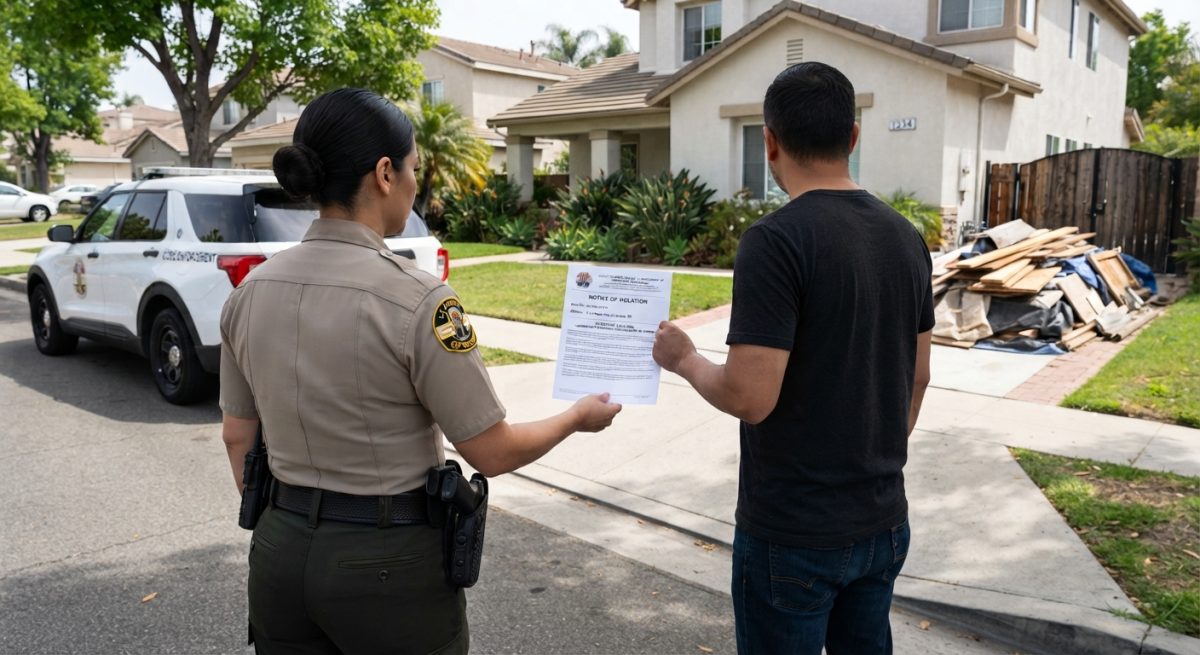
A notice from the City of Los Angeles alleging a code violation can be easy to underestimate. A property owner may view it as a routine request to correct a problem. In some circumstances, however, a code-enforcement matter can lead to an administrative citation, monetary penalties, an administrative hearing, City-performed abatement, recovery of enforcement costs, or a potential lien against the property.
There is no single Los Angeles code-enforcement procedure that applies to every violation. The process can depend on the provision allegedly violated, the City department involved, the nature of the violation, and the enforcement authority being used.
For example, the Los Angeles Municipal Code contains an administrative-citation system for specified "Administrative Violations." Separately, Los Angeles has procedures for nuisance abatement and for confirming proposed liens based on qualifying abatement and code-enforcement costs. The Los Angeles Housing Department, Los Angeles Department of Building and Safety, City Attorney's Office, and other City agencies may also have different enforcement responsibilities and procedures.
That distinction is important because a notice of violation, administrative citation, abatement proceeding, and property lien are not the same thing.
For a property owner, the important question may therefore be more than:
How do I fix this code violation?
It may also be:
What exactly has the City ordered, what happens if I disagree, and what can happen if the matter is not resolved?
This guide explains the general Los Angeles code-enforcement framework and some of the legal and property consequences that can arise.
Important: Los Angeles code enforcement is highly dependent on the particular ordinance, agency, property, and circumstances involved. This article is general legal information, not legal advice. A property owner should review the actual notice or citation received and the law cited in that document before deciding how to respond.
There Is No Single Los Angeles Code-Enforcement Process
"Los Angeles code enforcement" is not one uniform procedure.
Different City departments and enforcement authorities can become involved depending on the nature of the alleged violation. A matter involving building work or permits may involve the Los Angeles Department of Building and Safety. Housing conditions may involve the Los Angeles Housing Department. Other matters may involve the City Attorney's Office, Public Works, Animal Services, or another City agency.
The underlying issue could involve building work, zoning or land use, housing conditions, a nuisance, a permit, property maintenance, a public right-of-way, or another requirement.
The City's Municipal Code contains numerous different enforcement provisions, so a procedure that applies to one type of violation should not automatically be assumed to apply to another.
That is one reason the first step after receiving a notice is to determine exactly what type of enforcement action has been taken.
The Document You Received Matters
A property owner may receive several different types of documents during a code-enforcement matter.
Depending on the circumstances, the document could be a:
- Notice of violation or noncompliance
- Order to correct
- Administrative citation
- Hearing notice
- Nuisance-abatement notice
- Proposed-lien notice
- Department-specific enforcement document
The document should be examined for several important details:
- Which City department or agency issued it?
- What property or condition is identified?
- What specific code section is cited?
- What correction is required?
- Is a fine already being imposed?
- What deadline applies?
- Is there a procedure for requesting review or a hearing?
- Does the document warn of additional enforcement, abatement, costs, or other consequences?
The distinction matters because the procedures and deadlines can be different.
The City's administrative-citation provisions, for example, are only one part of the larger Los Angeles enforcement system.
A general internet search for "Los Angeles code violation deadline" may therefore provide less useful information than carefully reading the actual document issued by the City.
Administrative Citations Are Only One Enforcement Tool
Los Angeles uses an Administrative Citation Enforcement, or ACE, system for certain qualifying Municipal Code violations.
The Los Angeles City Attorney's ACE Program describes the program as a non-criminal enforcement approach that uses administrative fines rather than arrest, incarceration, or criminal records for covered violations.
But ACE should not be treated as synonymous with all Los Angeles code enforcement.
The Los Angeles Municipal Code's administrative-citation system applies to specified "Administrative Violations" under Article 1.2. It does not mean that every building, zoning, housing, nuisance, permit, or property dispute automatically proceeds through the same ACE process.
Under LAMC § 11.2.03, an enforcement officer may issue an administrative citation when an Administrative Violation has occurred.
The same section contains an important rule for certain continuing violations. When a qualifying Continuing Violation is involved, a reasonable period to correct the violation must generally be provided before an administrative fine is imposed. If the violation is remedied before that correction period expires, the administrative fine is not imposed, although applicable enforcement costs may still be recoverable.
The code also provides that each Administrative Violation is a separate offense and that each day an Administrative Violation exists can constitute a separate offense subject to an administrative fine under the article.
That rule is part of the ACE framework. It should not be interpreted to mean that every City notice automatically generates a new fine for every day.
How Much Can an Administrative Citation Cost?
There is no single dollar amount that applies to every administrative citation.
The applicable fine can depend on the type of Administrative Violation, the code provision involved, whether it is a first or subsequent violation, and whether the Municipal Code contains a special penalty provision.
For example, LAMC § 11.2.04 establishes administrative-fine schedules and also contains special rules for certain violations involving buildings, structures, land, permits, and approvals.
The amount appearing on the actual citation, together with the cited code provision and applicable fine schedule, is therefore more important than a generalized statement about what a Los Angeles code violation "usually" costs.
What Are the Deadlines for Contesting an ACE Citation?
Deadlines are particularly important because failing to act can affect a person's ability to contest an administrative citation.
ACE timing can be technical and may depend on the type of citation, the City notice issued, and the stage of the administrative process. City materials describe an initial-review process followed, where applicable, by an administrative-hearing request. Different City materials and code provisions use different timing language for review requests, hearing requests, payment, and late-payment consequences.
For that reason, a recipient should not rely on a general online deadline alone. Read the actual citation and every follow-up notice carefully, preserve the mailing envelope, and comply with the deadline and contest instructions stated in the City's documents. If the matter is disputed or the deadline is close, prompt legal advice may be appropriate.
The Los Angeles Municipal Code's administrative-citation provisions address appeals, administrative hearings, judicial review, and the consequences of failing to pay administrative fines and costs.
What If You Disagree With the Alleged Violation?
A property owner does not necessarily have to accept the City's allegation simply because a notice has been issued.
Depending on the enforcement mechanism, relevant questions may include:
- Does the cited code provision actually apply?
- Does the alleged condition exist?
- Was the condition already corrected?
- Was the correct person identified as responsible?
- Was a permit or other approval already issued?
- Was the required correction period provided?
- Was the proper procedure followed?
- Is there an available review or hearing process?
For an ACE citation, the Municipal Code provides administrative procedures for challenging the citation. Other disputes, such as those involving building permits, zoning, land use, or housing conditions, may follow different procedures through the responsible department.
The important point is to identify the actual enforcement track rather than assuming that every City code dispute follows the ACE process.
What Happens If the City Performs the Abatement?
Some code-enforcement matters go beyond simply telling a property owner to correct a condition.
Where authorized by law, the City may undertake or arrange nuisance abatement or other corrective work and seek recovery of qualifying costs.
The Los Angeles Administrative Code's nuisance-abatement provisions address procedures for abating certain public nuisances and recovering specified fees, costs, and charges.
In some circumstances, emergency abatement may also be authorized. For example, the Municipal Code contains provisions allowing immediate action where a public nuisance presents an imminent danger to public health or safety.
City-performed abatement is therefore different from receiving a routine correction notice. Once the City incurs costs performing authorized work, the financial consequences may continue even after the physical condition has been corrected.
How Can Abatement or Code-Enforcement Costs Become a Proposed Lien?
A particularly important issue for property owners is the possibility that qualifying costs can eventually become associated with a lien against the property.
But this does not mean that every code citation, notice, or unpaid fine automatically becomes a lien.
Los Angeles Administrative Code § 7.35.3 establishes a procedure for confirming proposed liens for qualifying nuisance-abatement costs and code-enforcement costs.
For qualifying nuisance abatement, the responsible City department may submit an itemized report to the City Council showing the actual cost of the abatement.
The provision also addresses certain code-enforcement fees, costs, and charges that are legally collectible, including qualifying inspection and enforcement costs, permit fees, fines, late charges, and interest.
Where appropriate, the recoverable amount can also include an administrative component tied to the cost of the City's work. Section 7.35.3 provides for an amount equal to 40 percent of the cost of actual work in appropriate circumstances, subject to a minimum amount. That provision does not mean that a 40 percent charge is automatically added to every code-enforcement matter.
What Happens Before a Proposed Lien Is Confirmed?
A proposed lien does not simply appear on the property without a legal process.
Under Section 7.35.3, the responsible City department can submit a report to the City Council, after which the City Clerk schedules a hearing and provides written notice to specified owners and interested parties.
The notice must identify the property, state the proposed lien amount, describe the basis for the amount, and provide at least 45 days after notice to pay the applicable fee, cost, or charge. The notice must also explain the opportunity to appear before the City Council and object to confirmation of the proposed lien.
The City Council can confirm, disallow, or modify the proposed lien.
If the lien is confirmed, the City may proceed with recordation as authorized by applicable law. The consequences of a confirmed and recorded lien are substantially different from simply receiving an initial violation notice.
Why a Recorded Lien Can Matter to a Property Owner
A recorded lien turns what may have started as a municipal compliance problem into a real-property issue.
That can matter when an owner wants to:
- Sell the property
- Refinance it
- Transfer ownership
- Resolve title issues
- Complete another transaction involving the property
It is also important to distinguish an unresolved enforcement matter from a recorded lien or other recorded encumbrance.
Not every open code violation will appear as a lien in a routine title search.
At the same time, an open violation may still affect a transaction through disclosures, lender requirements, permit history, escrow negotiations, or a buyer's inspection and due-diligence findings even if no lien appears on title.
What If You Are Buying a Property With an Existing Code Problem?
Buyers can encounter code-enforcement issues that were created before they became owners.
A property may have an open enforcement case, unpermitted construction, an unresolved zoning or land-use problem, an outstanding correction requirement, or a proposed or recorded lien.
Before assuming that the problem belongs entirely to the seller, a buyer should determine:
- What condition or work is alleged to violate the law?
- Which department is handling the matter?
- Is the case still open?
- What corrective work is required?
- Are permits or approvals needed?
- Are there unpaid fines, fees, or enforcement costs?
- Has a lien or other encumbrance been recorded?
Whether an enforcement problem follows the property, remains a personal obligation, or creates another type of liability depends on the applicable ordinance and the status of the particular matter.
Municipal records may therefore be important in addition to a seller's disclosures and a conventional title search.
What Should a Property Owner Do After Receiving a Code Notice?
A few practical steps can make a substantial difference.
1. Keep the original documents
Save the notice, citation, envelope, photographs, inspection reports, permits, plans, correspondence, and other relevant records.
The mailing envelope can sometimes be important when a deadline depends on service or mailing.
2. Identify the issuing agency
Determine whether the document came from LADBS, the Los Angeles Housing Department, the City Attorney's Office, Public Works, Animal Services, or another City agency.
3. Find the exact code section
Do not rely solely on the description of the violation.
Find the specific Municipal Code or other legal provision identified in the notice. That provision can determine the available enforcement mechanism and potential penalties.
4. Calendar every deadline
Do not assume that all Los Angeles code-enforcement matters have the same deadlines.
Administrative citations can involve different stages of review, hearing requests, payment obligations, and late-payment consequences. The actual documents received from the City should control the immediate response.
5. Determine what kind of enforcement action you received
Is it a correction notice, administrative citation, order, hearing notice, abatement notice, or proposed-lien notice?
The answer can change what you need to do next.
6. Document the condition
Take photographs and preserve permits, inspection reports, contractor records, receipts, leases, plans, and other documents that may establish what happened and when.
7. Do not assume paying a fine resolves everything
Payment of an administrative fine does not necessarily eliminate an underlying obligation to correct a condition.
Conversely, under certain continuing-violation provisions, correcting the condition within the applicable correction period can prevent an administrative fine from being imposed while applicable enforcement costs may still remain recoverable.
The precise consequences depend on the enforcement mechanism and code provision involved.
When Should You Consider Consulting a Los Angeles Attorney?
Not every code violation requires an attorney.
A straightforward correction that is clearly understood and uncontested may be handled directly by a property owner.
Legal assistance can become more important when:
- The alleged violation is disputed
- Significant fines or costs are involved
- A hearing or review deadline is approaching
- The City is threatening or undertaking abatement
- Unpermitted construction is involved
- Zoning or land-use rights are disputed
- A proposed or recorded lien is involved
- The property is being sold or refinanced
- The enforcement action could materially affect the property's use or value
Depending on the circumstances, the legal issue may involve real estate, land use and zoning, construction law, administrative law, landlord-tenant law, or civil litigation.
The first step is to identify the actual legal problem rather than assuming that every matter described as a "code violation" follows the same process.
Bottom Line
A Los Angeles code violation can be relatively straightforward, or it can develop into a much more significant legal and financial matter.
Different enforcement mechanisms may be available depending on the violation and the applicable law, including administrative citations, correction orders, administrative review or hearings, nuisance abatement, recovery of enforcement costs, and proposed or recorded liens.
There is no automatic sequence in which every violation proceeds from notice to citation to abatement to lien.
The critical first step is identifying the enforcement track: who issued the document, what law is allegedly being violated, what correction is required, and what deadlines apply.
If the matter is disputed or could result in substantial fines, abatement costs, a hearing, or a lien against the property, obtaining legal advice before an important deadline may be worth considering.
Understanding the enforcement process can be just as important as understanding the underlying code requirement. What begins as a municipal compliance issue can, in some circumstances, become a financial or real-property issue for the owner.
Disclaimer: This article is for general informational purposes only and is not legal advice. It does not create an attorney-client relationship. Laws and deadlines can change, and the application of law depends on the facts of each matter. Consider speaking with a qualified California attorney promptly about a specific potential claim.