
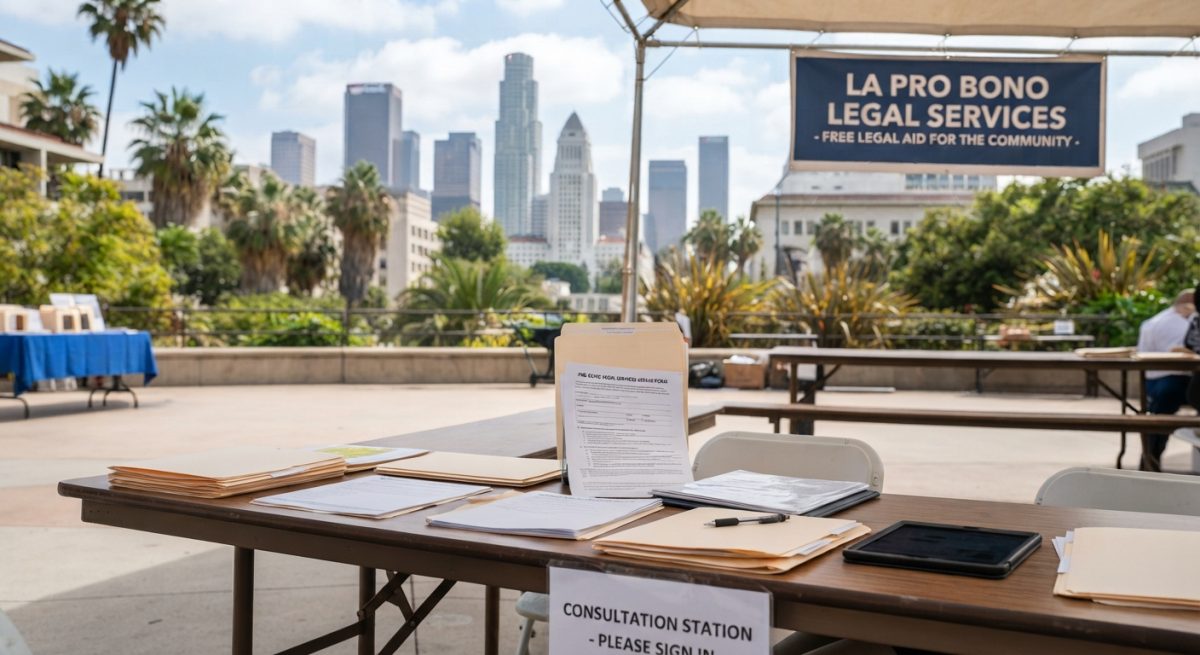
Legal trouble is stressful enough without worrying about how to pay for a lawyer. If you are dealing with an eviction, a family-law issue, an immigration matter, a benefits problem, a workplace dispute, or consumer debt, it may help to know that free and low-cost legal resources are available throughout Los Angeles County.
The right place to start depends on your problem, your income, where you live, and how urgent the situation is. Some organizations provide a lawyer in certain cases. Others offer advice, help with forms, clinics, referrals, or information about the court process.
The most important thing is not to wait. If you have received court papers, an eviction notice, a hearing date, or a deadline from a government agency, seek help as soon as possible.
What Free Legal Help Can Look Like
People often use the phrases “pro bono” and “legal aid” to mean the same thing, but they describe slightly different kinds of help.
Pro bono legal services are provided free of charge by lawyers who volunteer their time. Legal aid is usually provided through nonprofit organizations that help people who cannot afford a private attorney. These organizations may have staff lawyers, volunteer attorneys, advocates, and community partners.
Not every legal-aid organization can represent every person in court. In some situations, the help may be limited to a short consultation, guidance about your rights, assistance with forms, a referral, or help preparing for a hearing.
That can still make a major difference. Understanding a deadline, filing the right response, gathering the right documents, or speaking with the right organization early can help you avoid a more serious problem later.
Who May Qualify for Free Legal Help
Most legal-aid programs serve people with low incomes, but each organization has its own eligibility rules. Income is important, but it is not the only factor.
A program may also consider the size of your household, the type of legal issue you have, whether you live in its service area, whether you have a court date, and whether the organization has capacity to take new cases.
Do not assume that you make too much money or that your problem is not serious enough. Contact the organization and explain your situation. Even if it cannot represent you, it may be able to offer information, direct you to a self-help center, or refer you to another service.
The Legal Aid Foundation of Los Angeles is one place to start for many civil legal problems. It serves eligible low-income residents and also participates in court self-help services that may be useful to people representing themselves.
Legal Aid Foundation of Los Angeles
The Legal Aid Foundation of Los Angeles, often called LAFLA, is one of the largest civil legal-aid organizations serving Los Angeles County.
LAFLA may be able to help with housing problems, eviction matters, public benefits, family and domestic-violence-related issues, immigration concerns, employment problems, and veterans’ issues.
The organization also participates in self-help services for people handling some legal matters without a lawyer. These services can be useful if you need help understanding the court process, finding the correct forms, or preparing paperwork.
Before visiting an office or courthouse center, check LAFLA’s website for its current intake process, locations, office hours, and appointment requirements.
Neighborhood Legal Services of Los Angeles County
Neighborhood Legal Services of Los Angeles County, usually called NLSLA, provides free legal help to eligible people throughout Los Angeles County.
NLSLA assists with issues involving housing, evictions, homelessness prevention, public benefits, health-care access, consumer problems, domestic violence, employment, and workers’ rights.
It also operates Self-Help Legal Access Centers in Los Angeles County courthouses. These centers can assist people who are handling certain civil legal matters on their own and need help understanding forms, procedures, or next steps.
If you have a court date or court papers, mention that immediately when you contact NLSLA. A deadline can affect what type of help is available and how quickly you need to act.
Bet Tzedek Legal Services
Bet Tzedek Legal Services helps people facing financial hardship with a range of civil legal problems.
Its work includes matters involving older adults, housing, employment, consumer issues, tax concerns, and public benefits. It may also assist eligible entrepreneurs and small-business owners with certain business-related legal questions.
For small-business owners, available help may include reviewing contracts, forming a business, dealing with commercial leases, or understanding employment and intellectual-property issues. This is usually limited assistance for a specific legal matter, not ongoing business counsel or representation in every lawsuit.
If you own a small business and need legal help, explain the problem clearly when you contact Bet Tzedek. Let them know whether you have a contract deadline, dispute, lease issue, employee matter, or government notice.
Public Counsel
Public Counsel is a Los Angeles public-interest law firm and nonprofit organization. It works with staff attorneys, volunteer lawyers, legal clinics, and community groups.
Public Counsel handles a broad range of civil legal issues, including consumer rights, housing, immigration, education, family and youth matters, community development, economic justice, and veterans’ rights.
Depending on the program and the legal issue, you may receive a consultation, clinic appointment, advice, referral, or legal representation. Not every person who contacts Public Counsel will receive a lawyer for the entire case, but it can be an important resource for people who need help understanding their options.
Help With Family-Law Problems
The Harriett Buhai Center for Family Law focuses on family-law problems affecting eligible low-income Los Angeles County residents.
It may help with child custody and visitation, child support, parentage, divorce, property division, spousal support, and domestic-violence restraining orders.
The center may provide legal information, consultations, case-management assistance, and help preparing for court. In some cases, it may be able to arrange court representation through pro bono lawyers.
Representation is not guaranteed, but it is worth contacting the center if you are facing a family-law issue and cannot afford a private attorney.
Help With Housing and Homelessness
The Inner City Law Center focuses on homelessness and serious housing instability.
It may be particularly helpful for people who are homeless, at immediate risk of becoming homeless, living in unsafe conditions, or struggling to obtain public benefits needed to remain housed.
Its work includes eviction prevention, homelessness prevention, unsafe or substandard housing, public-benefit issues, and legal help for homeless veterans.
When contacting the organization, be clear about the urgency of your situation. Mention if you have an eviction notice, court papers, a disability, a veterans’ issue, a benefits problem, or nowhere safe to stay.
Court Self-Help Centers
If you are handling a legal matter without a lawyer, a court self-help center may be a good place to begin.
Self-help centers can often explain court procedures, help you identify the forms you may need, review forms for completeness, and direct you to additional resources. They can be especially useful in family-law, housing, and other civil cases where people frequently represent themselves.
Self-help staff are not your personal lawyers and cannot make decisions for you or guarantee an outcome. Still, they can help you understand what the court expects and what steps you need to take.
Before going in person, check the court or legal-aid organization’s website. Locations, hours, appointment systems, remote-help options, and the types of cases handled can change.
If You Have an Eviction Notice
Do not ignore an eviction notice, even if you believe your landlord is wrong.
California eviction notices may have different deadlines depending on the reason for the notice and the type of tenancy. Some notices give tenants only a few days to act. Others may provide 30, 60, or 90 days.
Local tenant protections may also apply depending on where you live in Los Angeles County. These rules can affect what a landlord must do before filing an eviction case.
An eviction notice is not the same as court papers. If your landlord files an eviction lawsuit, you may receive a summons and complaint. The deadline to respond to court papers can be short, so seek legal help immediately if you receive them.
You can read general information about eviction notices on the California Courts website, but a legal-aid organization or tenant-support resource may be able to help you understand how the rules apply to your situation.
How to Prepare Before You Ask for Help
Before you contact a legal-aid organization, gather the documents connected to your problem. This may include court papers, notices, letters, leases, contracts, emails, text messages, benefit letters, pay stubs, tax documents, photographs, payment records, or other evidence.
Keep the original documents whenever possible. If the organization asks for documents, send copies or clear photographs unless it tells you otherwise.
It also helps to write down a short timeline. Start with what happened, when it happened, who was involved, and what result you are hoping for.
For example, you might write:
My landlord gave me a notice on August 20. I paid the rent they say I owe on August 18, and I have proof of payment. I have not received court papers. I want to know whether I need to respond to the notice and what I should do if my landlord files an eviction case.
This kind of summary helps the intake worker understand your problem quickly.
When you first call or apply online, say right away if you have a court date, an eviction notice, an eviction lawsuit, a restraining-order hearing, an immigration deadline, or a deadline to appeal a decision about benefits.
If You Need a Private Attorney
Not everyone qualifies for free legal aid, and nonprofit organizations cannot take every case. If you need to hire a private lawyer, you can use the State Bar of California’s certified lawyer-referral-service directory.
A certified referral service can help you find an attorney who handles the kind of legal issue you have. Some lawyers may offer a reduced-fee or no-fee initial consultation.
Before hiring a lawyer, ask how the lawyer charges, whether a retainer is required, whether payment plans are available, and what costs you may be responsible for beyond the attorney’s fee.
You can also ask about limited-scope representation. This means hiring a lawyer for only part of the case, such as reviewing documents, preparing a filing, giving advice, or appearing at one hearing. For some people, this can be more affordable than hiring a lawyer to manage the entire case.
Getting Help
The first organization you contact may not be able to take your case. That does not necessarily mean you have no options.
Ask whether the organization can refer you to another legal-aid provider, a court self-help center, a lawyer-referral service, or a local clinic. Keep trying, especially if you have a deadline or a serious housing, safety, family, or immigration concern.
Free legal help is often limited, but reaching out early gives you the best chance of finding the support you need.
Disclaimer: This article is for general informational purposes only and is not legal advice. It does not create an attorney-client relationship. Laws and deadlines can change, and the application of law depends on the facts of each matter. Consider speaking with a qualified California attorney promptly about a specific potential claim.